-

Now available for $24.95 including shipping. -
Now available for $21.00 including postage. Vendors I Like
 Click Here to buy from Cobrahead
Starting Seedlings Indoors
Before we launch into this week’s article…
Gardening Classes with Henry
Lebanon College: Gardening: A Practical Workshop. Garden writer Henry Homeyer will teach you the basics of organic vegetable and flower gardening. From garden design to seed-starting , planting, watering, weeding, mulching, and harvesting, this course will give each student practical knowledge of gardening. Tuesday nights from 6:30-8:30 for 5 weeks, April 3-May 2.Contact Lebanon College to reserve a spot for this5-part workshop www.lebanoncollege.edu or call 603-448-2445.
AVA Gallery, Lebanon. Henry will teach 3 classes at AVA Gallery this spring. You may sign up for one or all of these workshops:
Sculpting the Living Landscape: Starting Flowers from Seed
April 9; Monday, 6:30–8:30pm; One 2-hour class
Sculpting the Living Landscape: Perfect Perennials for the Upper Valley Garden
April 23; Monday, 6:30–8:30pm; One 2-hour class
Sculpting the Living Landscape: Organic Techniques for Enriching Soil and Managing Pests
May 7; Monday, 6:30–8:30pm; One 2-hour class
For more information go to www.avagallery.org or call 603-448-3117.
Starting Seedlings Indoors
As winter morphs into spring, I get antsy. I want to start growing things. Even though it is still too early for starting most things by seed, it is the right time to plant artichokes, onions, peppers and leeks indoors. Tomatoes? Not until April. Squash? Not until May.
Whatever and whenever you start, there are several variables that need to be controlled: light level, moisture, available fertilizer and temperature. Pay attention to these factors and you will do well. The first thing I do each year is get out my lights. Starting seedlings on windowsills really doesn’t work for most things. Little seedlings get tall and leggy, reaching for light if all they get is a few hours of sunshine in a window.
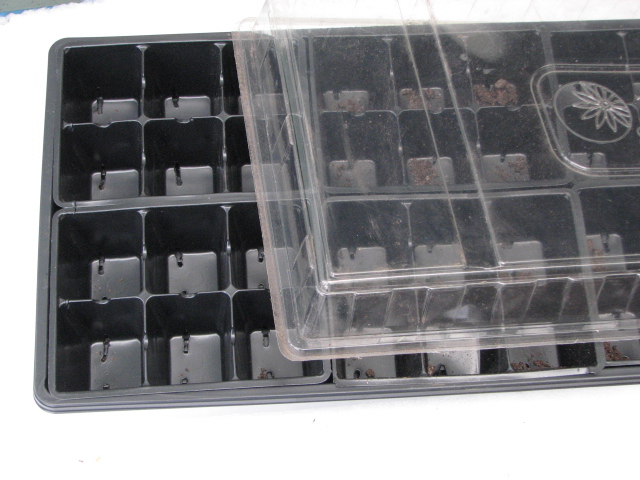
6-Packs and covers
My lights were an investment, but have paid for themselves many times over the years. I start 200-300 seedlings each year and seeds are much cheaper than seedlings bought in 6-packs at the nursery. And I often start 20 kinds of tomatoes and half a dozen types of hot peppers – most of which I would never find for sale.
This year I have upgraded my lights. The old T-12 (fat style) fluorescent tubes lose their potency over time, and are less efficient than the modern, thinner T-8 tubes. And the T-12 lights are being phased out due to federal energy regulations. So if you have old lights, think about upgrading. LED lights are also available, and while considerably more expensive than fluorescents, they are more energy efficient. I got some from Sunshine Systems (www.sunshine-systems.com or 866-576-5868).
If you don’t want to invest in a plant stand, a card table will do if you’re not starting too many plants. Still, I like my stand because it will hold 2 flats of plants on each shelf, and has 3 shelves – that’s enough for about 200 seedlings. Gardener’s Supply (www.gardeners.com or 888-833-1412) has some nice plant stands, but they are not cheap. Try your local garden center, too, or think about making your own. If buying, look for a stand that allows you to raise the lights as plants grow – 6 inches above the plants is ideal. One last thing: only run your lights 14 hours a day. They need their beauty rest, too.
When seeds first germinate they are very sensitive to drying out, so I like the clear plastic covers that are sold to fit over flats. They hold the moisture like little greenhouses. If you use them, plant things that germinate at the same rate in any given flat – germination times can vary from 3 to 18 days, depending on the plant species. Remove the covers as soon as plants touch them.
Don’t keep your seedlings soggy. Let the potting mix dry out before watering. You may need to water lightly every day as plants get bigger, however.
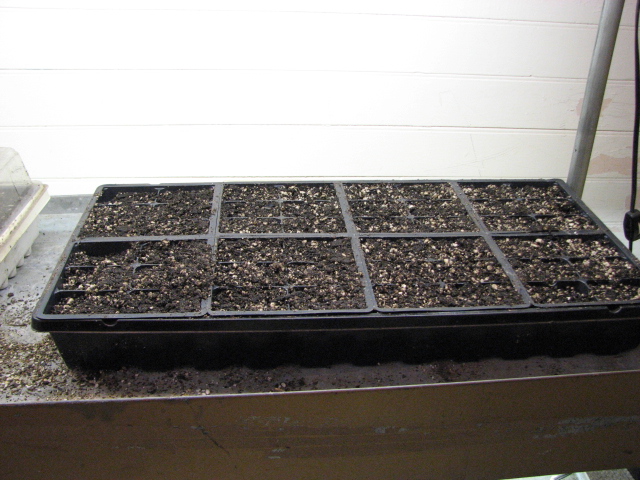 If you buy potting soil or seed starting mix, it is mostly peat moss, which has little nutrition to offer a plant. It is used for its ability to hold moisture. I suggest mixing it 50-50 with compost – either your own homemade stuff or the kind that comes in a bag.
Even with compost added to the mix, as your plants get bigger, you will need to offer some plant food. I don’t recommend using the chemical versions. My plants, once in the garden, will have to grow without chemical fertilizer, so I don’t want to give them any now. I believe that my seedling’s root systems will be more vigorous if they are not given lots of soluble chemical fertilizer.
The options for natural fertilizers are many. You can buy fish or seaweed fertilizers such as Neptune’s Harvest. Some fish fertilizers (made as emulsions) have an odor that may offend the nostrils of sensitive people. Neptune’s Harvest claims theirs is not stinky due to their special hydrolyzing process. Mega Green is another brand of fish fertilizer made by hydrolysis; it combats odor with natural mint essences, too.
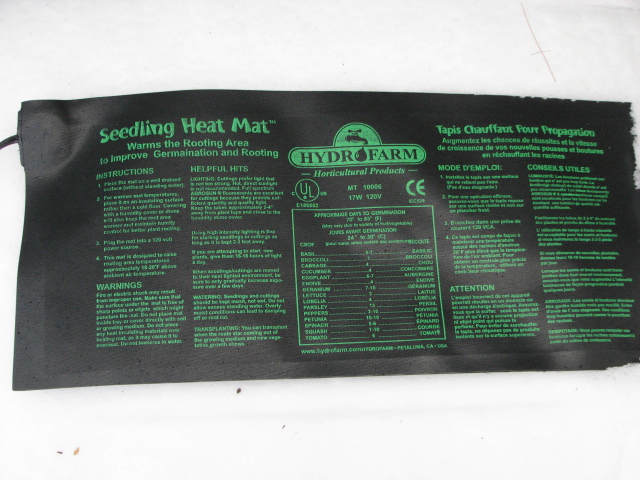
Heat mat for seedlings
Temperature is a key factor, too. I have electric heat mats that I place under my flats – bottom heat helps germination. These mats are sold at garden centers and may seem expensive, but if you grow peppers, for example, they really help. Once seedlings are up and growing I remove the mats– too much heat will push growth too fast (though sometimes I keep my peppers on them longer – they love heat).
I like 65-70 degrees during the day and 10 degrees cooler at night. A spare bedroom is a good place to grow things – you may be able to regulate the temperature by opening a window or turning off the radiator.
Finally, I like to move tomato and pepper seedlings into 2 or 3 inch pots once they are 4-6 weeks along. This allows the plants to have bigger root systems and minimizes root crowding. Our seasons can be cut short by fall frosts, so I like to give my plants any advantage I can.
You may reach Henry Homeyer at henry.homeyer@comcast.net
Identifying Trees in Winter
Before we launch into this week’s article…
Gardening Classes with Henry
Lebanon College: Gardening: A Practical Workshop. Garden writer Henry Homeyer will teach you the basics of organic vegetable and flower gardening. From garden design to seed-starting , planting, watering, weeding, mulching, and harvesting, this course will give each student practical knowledge of gardening. Tuesday nights from 6:30-8:30 for 5 weeks, April 3-May 2.Contact Lebanon College to reserve a spot for this5-part workshop www.lebanoncollege.edu or call 603-448-2445.
AVA Gallery, Lebanon. Henry will teach 3 classes at AVA Gallery this spring. You may sign up for one or all of these workshops:
Sculpting the Living Landscape: Starting Flowers from Seed
April 9; Monday, 6:30–8:30pm; One 2-hour class
Sculpting the Living Landscape: Perfect Perennials for the Upper Valley Garden
April 23; Monday, 6:30–8:30pm; One 2-hour class
Sculpting the Living Landscape: Organic Techniques for Enriching Soil and Managing Pests
May 7; Monday, 6:30–8:30pm; One 2-hour class
For more information go to www.avagallery.org or call 603-448-3117.
Identifying Trees in Winter
Most of us enjoying knowing the names of our acquaintances – including trees. It’s tougher to identify trees in winter because most have no leaves, which is how we generally recognize trees. But by observing overall shape, bark, branching patterns, buds and the presence or absence of leaves, you should be able to pick out several common trees quite easily.
The trees discussed here include 5 that keep all or some of their leaves; the rest lose all their leaves. The first group includes white pine, Canadian hemlock and spruce, all of which have green needles – their form of leaves. Oaks and beeches are broad-leafed trees that hold all or some of their leaves, though the leaves are dead and brown. Young trees hold more of the dead leaves than more mature ones.
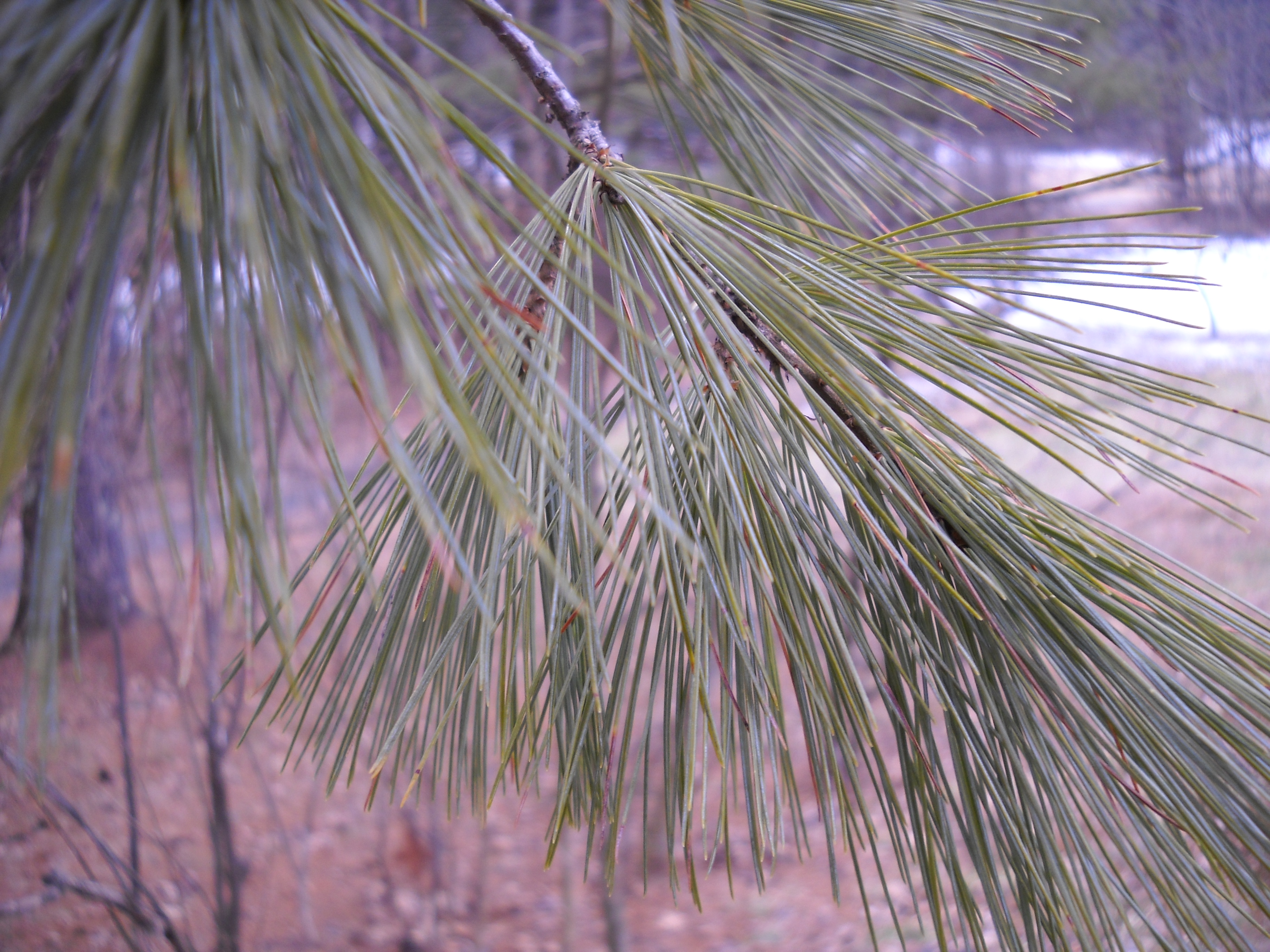
White Pine
White pine (Pinus strobus) has clusters of 5 soft needles, each about 3 inches long. Branches grow in whorls off the trunk; each year the tree grows just one new set of branches, so you can see how fast they grow by observing the distance between whorls on the main trunk. From a distance you can see clumps of needles pointing up near the top of the tree.
Canadian hemlock (Tsuga canadensis) has short, flat needles that feel soft to the touch and that have a white line on the underneath side of each. It is one of the few trees in the woods that can grow in deep shade – as well as full sun.
There are several kinds of spruce (Picea spp.), but all share this characteristic, which will separate them from hemlock trees: turn over a branch and observe the color of the leaves. If the needles on the top side and the bottom of the bough are the same color, it is a spruce. Spruce needles are pointy and sharp. Spruce hold more snow on their branches than other evergreens, too, often leaving little snow beneath the tree.
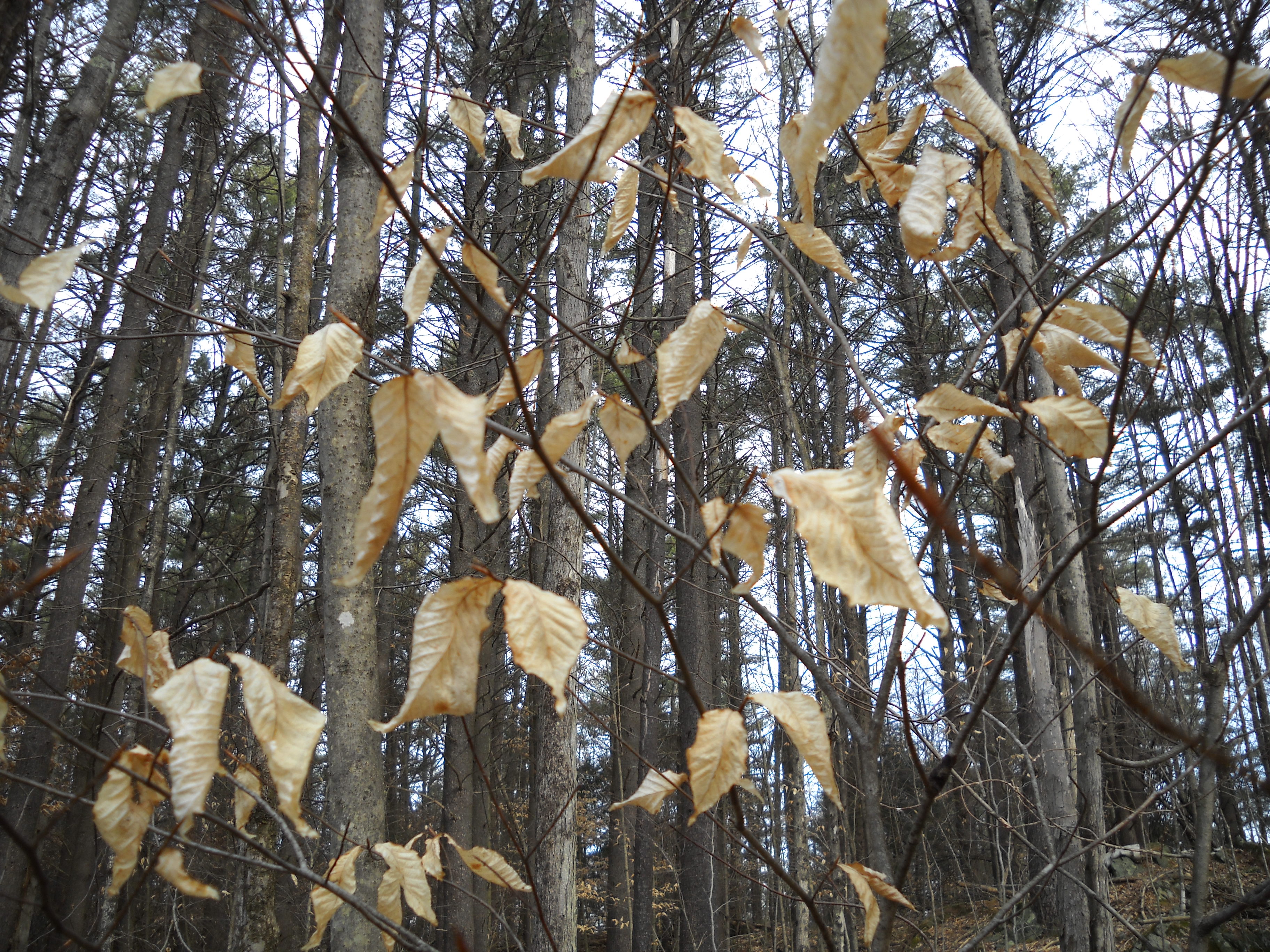
Beech Leaves
American beech (Fagus grandifolia) is most easily identified by its smooth gray bark; some older trees have bark that is scarred by a fungus. Their buds are up to an inch long with sharp pointy ends; they are shaped a bit like little cigars. Young beech trees hold lots of leaves but the older ones tend to lose most. Leaves are 2-5 inches long, oval, and have serrated edges.
Oaks ( Quercus spp.) also hold at least a few leaves. The leaves are lobed, often ending in a sharp point. There are a few oaks that have different shaped leaves, but you probably won’t come across one. Acorns are a dead giveaway, too, though most acorns have fallen by now.
Buds and small (side) branches are either opposite each other on a branch or they alternate – one here, one
farther along on the other side. Only 3 common trees have opposite branching: the maples (many species), ash (4 species), and horse chestnut. There are several kinds of shrubs that have opposite branching, including viburnums, most dogwoods, lilacs and honeysuckles. Don’t be deceived by the fact that often twigs are broken off, so that the branching pattern may not appear at first glance to be opposite.
Of the many kinds of maples (Acer spp.), sugar and red maples are common in most woods. At the end of each branch you will see 3 buds: a terminal bud and a bud on each side of it. The buds are sharply pointed on sugar maples, less so on red maples. Red maple buds get redder as the winter progresses. Get to know a few big old sugar maples during sugaring season, and you will soon recognize the color of bark and the overall shape. Red maples tend to have branches that spread less than sugar maples, and they can live in wet places (but sugar maples rarely do).
White ash (Fraxinus americanus) also has opposite buds, but they are much more rounded than those on maples. The key characteristic for me is the bark, which is furrowed into diamond shaped areas on mature trees. You will also see that small branches on an ash are also much less delicate than those on a maple. Looking up at branches, you will see that they have lots of lumps and bumps near their tips.
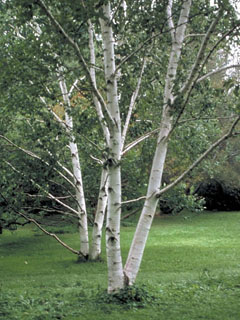
White Birch
White or paper birch (Betula papyrifera) is one of the best known of our native trees: it has bright, white bark that tends to peel as the tree gets bigger. Other birches include gray and yellow birches. The former has dirty gray bark; the latter has finely peeling silvery or golden bark. All have horizontal marks on the bark called lenticels. Lenticels allow air into the inner growing layer of the tree. Their twigs are fine, and may have catkins (narrow pollen-producing structures 2 inches long or so) towards the top of the tree.
One of our most common trees is the poplar (Populus deltoides). Poplars are fast growing, short-lived trees that jump up anywhere, even in poor soil along roadsides. They tolerate wet or dry locations and are immune to road salt. I recognize them from the color of the bark – it is greenish to putty-colored, particularly up high. It is often an irregular-shaped tree that is considerably taller than wide.
So clip this article and take a walk in the woods. See what you can identify. And bring along a tree I.D. book to help. I like A Guide to Nature in Winter by Donald Stokes, as it has information about everything you can see outdoors in winter, not just the trees.
Henry is the author of four books and writes a self-syndicated weekly column for 12 newspapers throughout New England. You can contact Henry by e-mail at henry.homeyer@comcast.net.
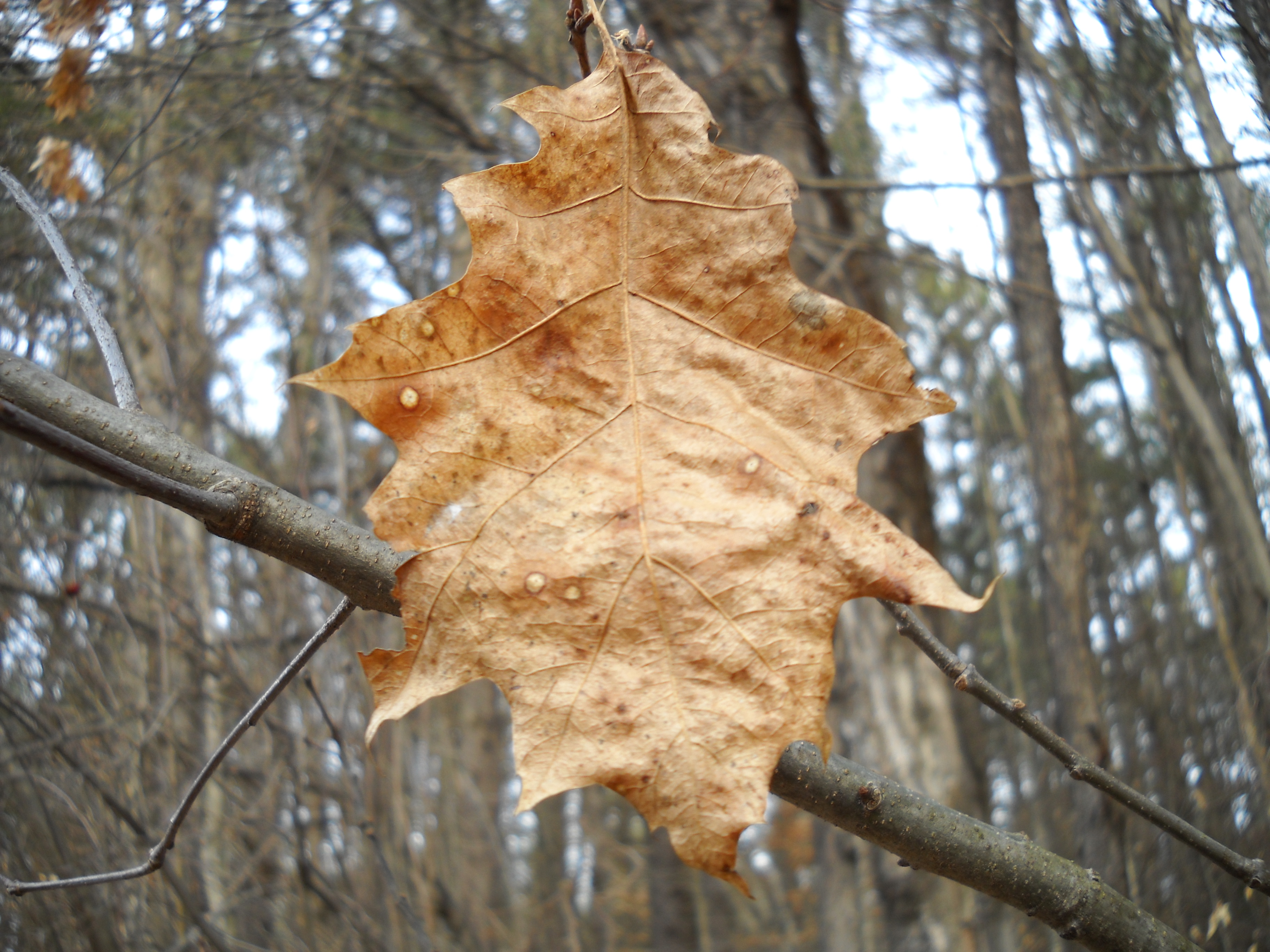
Oak Leaf
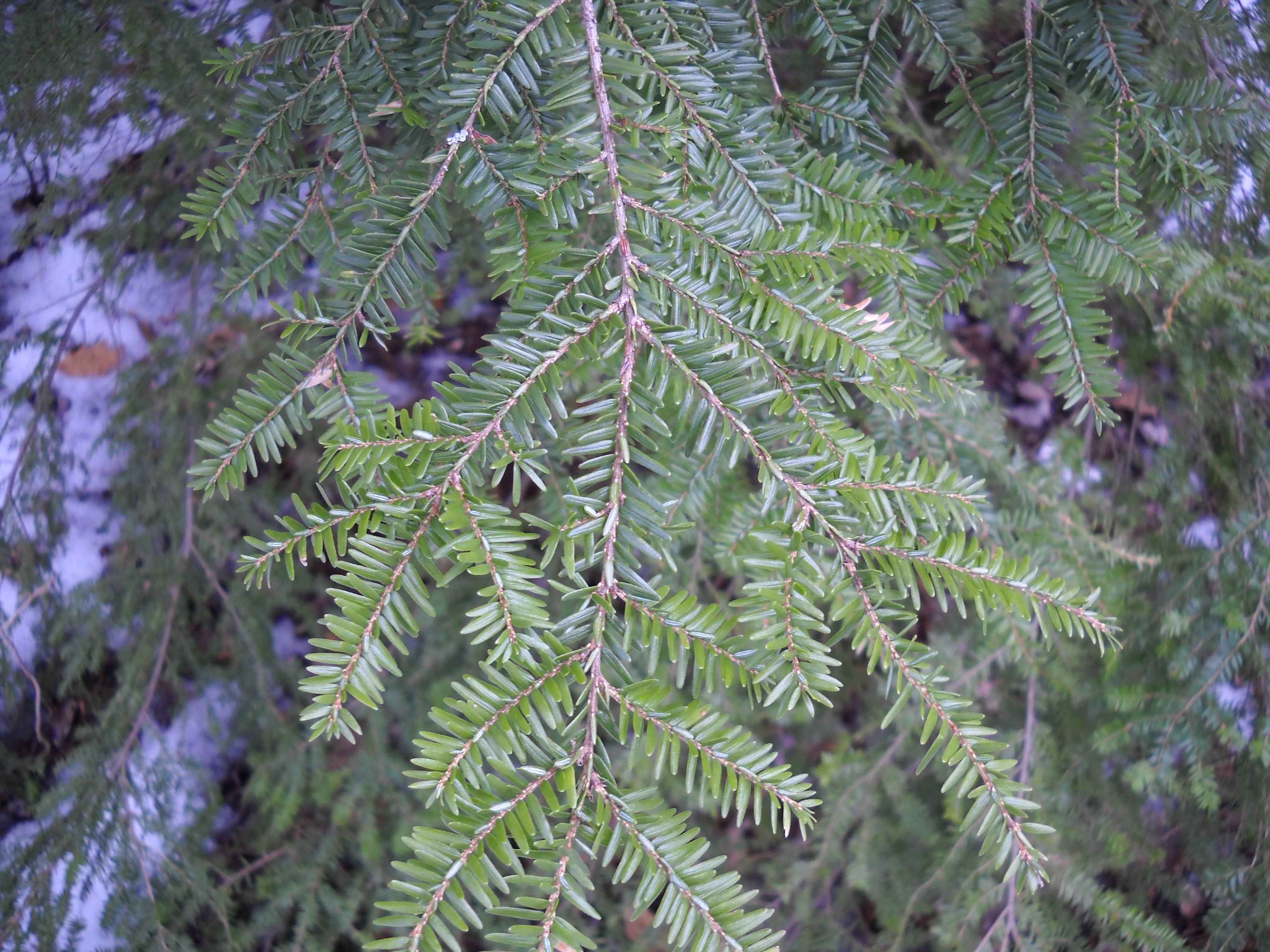
Hemlock
Planting by the Phase of the Moon
Before we launch into this week’s article…
Gardening Classes with Henry
Lebanon College: Gardening: A Practical Workshop. Garden writer Henry Homeyer will teach you the basics of organic vegetable and flower gardening. From garden design to seed-starting , planting, watering, weeding, mulching, and harvesting, this course will give each student practical knowledge of gardening. Tuesday nights from 6:30-8:30 for 5 weeks, April 3-May 2.Contact Lebanon College to reserve a spot for this5-part workshop www.lebanoncollege.edu or call 603-448-2445.
AVA Gallery, Lebanon. Henry will teach 3 classes at AVA Gallery this spring. You may sign up for one or all of these workshops:
Sculpting the Living Landscape: Starting Flowers from Seed
April 9; Monday, 6:30–8:30pm; One 2-hour class
Sculpting the Living Landscape: Perfect Perennials for the Upper Valley Garden
April 23; Monday, 6:30–8:30pm; One 2-hour class
Sculpting the Living Landscape: Organic Techniques for Enriching Soil and Managing Pests
May 7; Monday, 6:30–8:30pm; One 2-hour class
For more information go to www.avagallery.org or call 603-448-3117.
Planting by the Phase of the Moon
The moon attracts me the way my porch light attracts moths. I am drawn to it. I love to stare at it and I can feel its presence – particularly the full moon when I’m trying to get to sleep. Some gardeners believe that it affects plants, too, drawing up water from the soil into leaves and fruits as the moon gets bigger, pulling water and nutrients down to roots as it wanes. If the moon can affect the tides, some say, it is logical that the moon can affect our garden plants.
It’s nearly time to start artichokes, leeks and peppers indoors, so I thought I should learn more about planting by the phase of the moon. I called Sarah Milek of Cider Hill Gardens in Windsor, Vermont (www.ciderhillgardens.com) because I know she decides exactly when to plant seeds and seedlings according to the phase of the moon.

Stella Natura
Sarah bases her decisions on a biodynamic calendar called Stella Natura: Inspiration & Practical Advice for Gardeners & Professional Growers (www.stellanatura.com). The calendar explains on the cover that it is the “Biodynamic Planting Calendar Working with Cosmic Rhythms”. She told me that the calendar indicates for every day of the year, and for every hour of the day, whether it is an auspicious time to plant, transplant, weed or harvest. Following the calendar, she says, results in quicker germination, earlier crops, and better storage capabilities of her veggies.
Sarah Milek told me of a friend who planted onions according to the calendar. But he didn’t finish that day, and did so the next – even though the calendar said not to plant anything that day. Those onions did poorly – the crop was a total bust – but those planted according to the calendar thrived. Everything was the same except some were planted a day later – and very different results were obtained. It made me wonder.
Stella Natura uses the phase of the moon and the position of the planets and the constellations to determine when to plant. The calendar is based on the principles of biodynamic agriculture, first proposed by an Austrian, Rudolph Steiner, in 1924.
Rudolf Steiner (1861-1925) was a philosopher and visionary. Waldorf schools are based on his educational principles, and the biodynamic movement is an outgrowth of his philosophy of agriculture. He spoke of life forces not detectable by the physical senses, yet linking together the universe and all living things. He believed that the energy of plants can be affected not only by our actions and the weather, but also by the energy of the moon, stars and planets. His philosophy of agriculture goes beyond the principles of organic farming, dealing not only with our inputs – compost instead of chemicals, for instance – but with life forces that affect our plants.
A follower of Steiner, a German named Maria Thun, did decades of observations and record keeping to aid in determining when to plant or to work with plants. According to biodynamic principles there are four elements: earth, air, water and fire. She noticed that root crops (including potatoes, onions and leeks, which are not technically root crops) do best when sown when the moon is passing through constellations associated with the earth element. Leafy things do best when the moon is associated with the element water, flowering plants do best associated with the air, and fruits with fire. Stella Natura is based on her work.
On a practical level, it makes sense to avoid planting leafy things during a time that is optimal for flowering plants – practitioners of this way of planting believe that this will encourage bolting. Tomatoes, beans, grains and tree fruits should be planted on a fruit day, or even a flower day (as flowers are an integral part of getting fruit).
Stella Natura spells out very precise instructions, day-by-day, hour-by hour. During transition times, when the moon is moving from one constellation to another, or when other factors affect the energy of the cosmos, there are times when no planting should be done. These areas are indicated with gray in the hour-by-hour boxes. Sometimes these time last a full 24-hour period, other times they are for as little as 2-4 hours.
The calendar explains that practical considerations such as the weather can and should affect when to plant, too. If you have started tomatoes indoors and the calendar specifies that the day is auspicious for planting them outdoors, do not do so if frost is predicted. I bought the calendar and shall do some lettuce plantings indoors this spring during times designated as good for leaves, some during times for flowers, and some during the blacked out parts of the calendar. This appeals to my scientific training. I vow to keep good records, and will report back to you, my faithful readers.
Even though I started gardening as a small boy and have been gardening for over 60 years, gardening is still a bit mysterious to me. Some years my onions are large and keep well. Other years they are smaller – or they rot. The same is true for my winter squash and other crops. So it’s time to see if the moon can help me to do better. I encourage you to do the same – and let me know what you find out.
Henry’s Web site is www.Gardening-Guy.com. His e-mail is henry.homeyer@comcast.net.
Hot Air Ballooning
(Published in the August Citizen September, 2010)
When I was a grade-schooler back in the mid-1950’s I read a lot during the summer. We had no TV, no electronic games, and obviously there was no e-mail or Facebook to suck up my time. I rode my bike, I swam, I played badminton with the next door neighbor, and I read books. Lots of books. My favorite series was about a pig named Freddy who was a detective and an adventurer.
The books were written by Walter R. Brooks who created a pig who could talk to the farmers who owned him, Mr. and Mrs. Bean, and to the other animals: Jinx the Cat, Charles the preening rooster, Hank the old white horse and Mrs. Wiggins, Wogus and Wurzburger the cows. Freddy could, somehow, type with his little trotters and was an accomplished poet. In my favorite of the series, Freddy and the Perilous Adventure, Freddy the Pig commandeered a hot air balloon and he and a few friends set off in it. I have wanted to do so ever since.
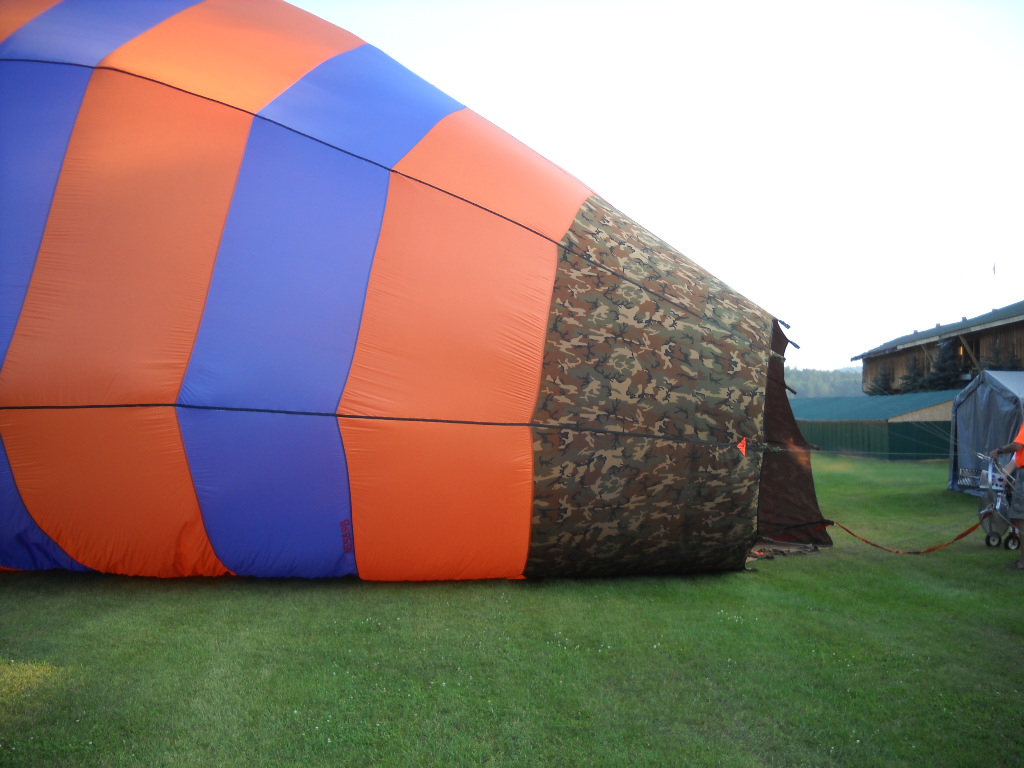
Filling the Balloon WIth Hot Air
July 6th was the one-year anniversary of my sister Ruth Anne Mitchell’s untimely death. I dreaded that the approach of that day, that memory. My friend and companion, Cindy Heath, asked me if we could do something to make that day something to look forward to, rather than dread. I thought of Freddy the Pig and decided we should sign up for a hot air balloon ride.
We took off from a tiny airstrip in Post Mills, Vermont with Brian Boland, a delightfully eccentric guy with a dark bushy beard and sunglasses that hide his eyes. Brian not only flies hot air balloons, he collects them and has a museum of all sorts of interesting stuff – cars, sidecars, balloon baskets and much more. He and friends built a life-sized brontosaurus out of scrap wood not long ago at the edge of the air strip. Brian exudes confidence, and with good reason. He is in his 40th year of ballooning, and has flown 8,133 flights – in 24 nations.
A hot air balloon is a wondrous thing. Point a stream of hot air (created by a propane burner) into the mouth of a multi-colored, rip-stop nylon balloon that is 75 ft tall and 55 ft wide, and it will gently lift you up. There is no jerky motion, no jet-propelled angst as your body is slams against an airplane seat. In fact, there are no seats. We stood in a wicker basket for the flight. There are no waiting lines, no airport security, no tickets to lose. In fact, Brian forgot to ask me for the fare, and I had to remind him that we needed to pay after the chase car returned us to our car.
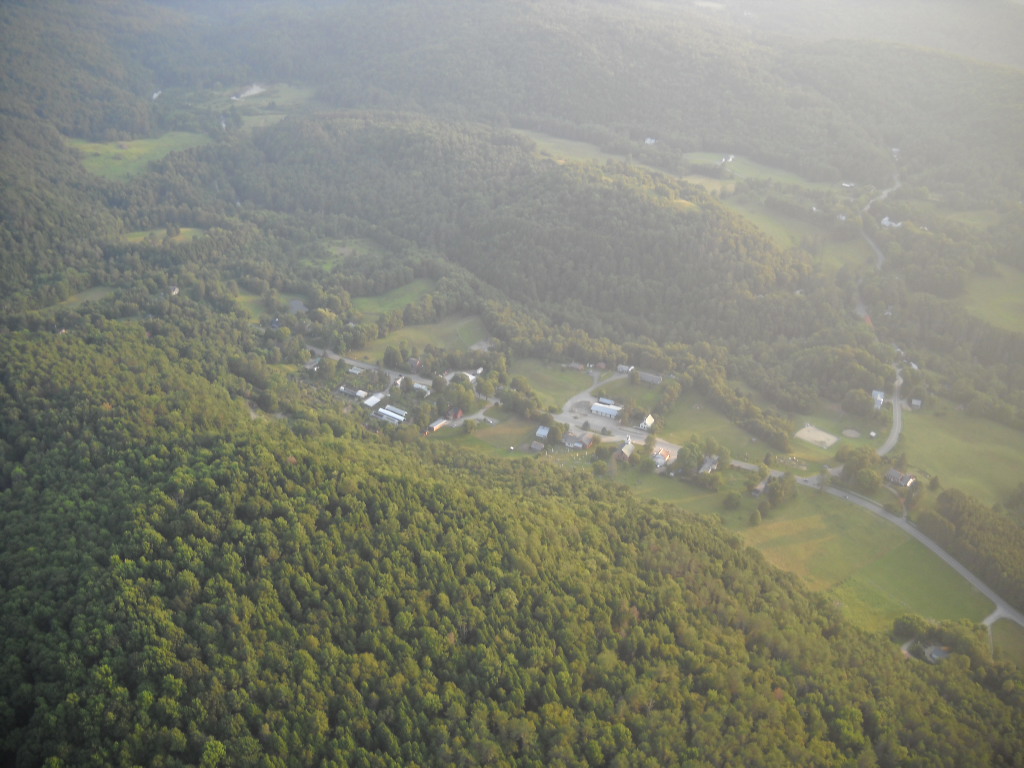
Flying High in Vermont
So there we were: Brian, Cindy and me. And Freddy the Pig, though only I could see him. My sister Ruth Anne, an American who adopted Ottawa as her home 40 years ago, might have been there in the balloon, too. She loved ballooning, and once had floated over the Serengeti Plain at dawn, hovering over wildebeest and eland and elephants.
I loved looking down on trees and farms and twisty dirt roads. On Lake Fairlee and little homemade ponds. From time to time Brian would squeeze the handle of the propane heater, producing a blast of hot air that would, a few moments later, bring us slowly, gently higher. There are no quick movements in a balloon, and never did I feel even the slight bit nervous.
We watched kids from Camp Lochearn walking down the road to get their evening ice cream in Post Mills, a chase car following them in case a camper got tuckered out or developed a blister. (Are kids a bit overly tended-to these days?). One hundred kids waved and hollered and wished they were up there with Freddy and me. We flew over my favorite plant nursery in Thetford Center, Vermont, giving me a different perspective on a place I’d visited countless times to buy trees and shrubs. We floated over Interstate 91 and I felt a bit sorry for the folks hurrying along at 70 mph while we floated listlessly in the breeze.
The temperature on the ground that day was in the nineties – one of those hot days I generally dread. But up in the balloon we were comfortable, though the heat and humidity limited our long distance views of the White Mountains of New Hampshire, and made our photos less than distinct. Still, I felt like Zeus as I looked down on the world.
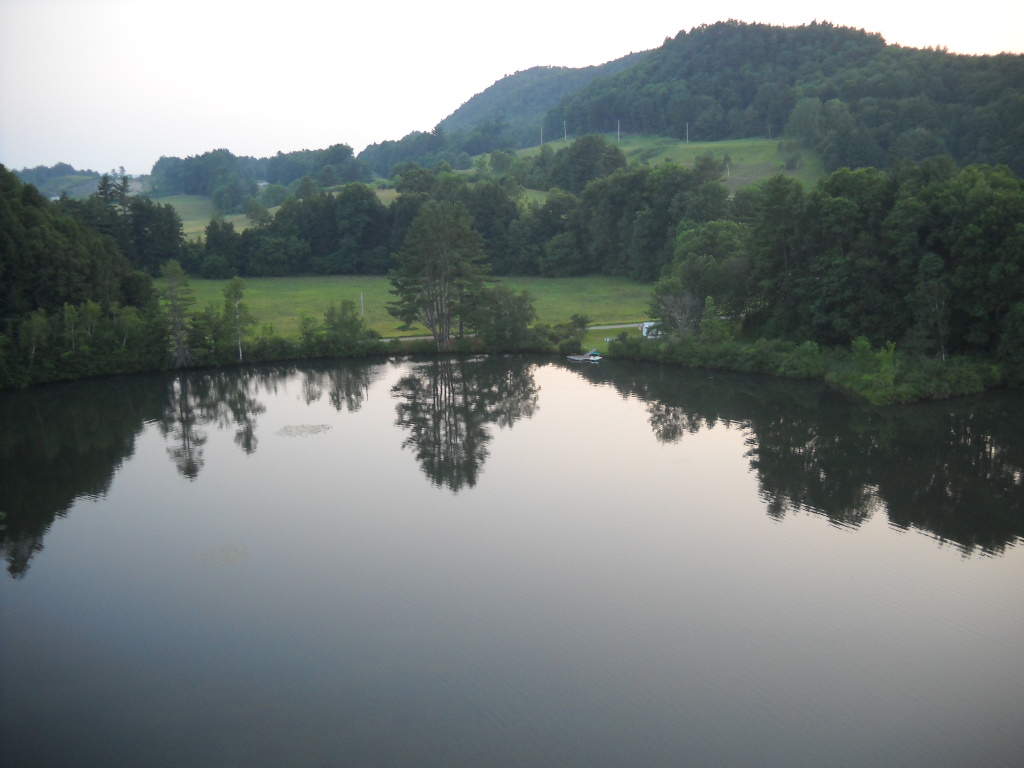
Floating Above Still Water
We approached the Connecticut River, but the winds were not right for a river crossing. Shortly before the sun disappeared Brian spotted a postage-stamp parking lot at a boat launch on the Pompanoosuc River. He gave directions to our chase car and Tina Foster, the driver, arrived and screeched to a halt. He threw down a wide nylon web line to her so she could guide us in. Brian called out to people at the boat launch, asking for help pulling us toward the designated stopping point. They did. Brain pulled a cord to release hot air from the balloon, and we gently descended. We landed spot on.
Even when we landed the adventure was not over. Half a dozen people helped us fold up the balloon, including Sophie, who appeared to be about 7 years old. We chatted and drank champagne and soft drinks with some of those who helped us – and found points of connection spanning decades and continents. It was a wonderful evening. I just wish my sister could have been there with us – but who knows? Maybe she was.
If You Go:
Where: Post Mills, Vermont, 20 minutes from Hanover, NH and Dartmouth College
Who to contact: Brian Boland, Balloon Vermont, 802- 333-9254
Cost: $260 /person for a 60-90 minute flight
Lodging: The Silver Maples Lodge and Cabins offers a package including lodging for 2 nights, Continental breakfast and the balloon ride for 2 adults for $725. http://www.ballooninnvermont.com/ or 803-333-4326. Silver Maple Lodge is one of Vermont’s oldest continuously operating country inns, with the main building dating back to the late 1700’s. Located in Fairlee, VT, just a few miles from Post Mills. (802) 333-4326 (802) 333-4326 (802) 333-4326 (802) 333-4326